


9 600
tickets processed in 12 months3 000
Tickets created by customers using the self-service portal at~250
calls/day before KolusHow a livestock equipment manufacturer handled 1,000 service requests per month, a third of which were self-service.

The context
Asserva designs and manufactures technological equipment for pig and cattle farming, which is used in France, Spain, and India. These are critical automated systems: a power or ventilation failure has an immediate impact on the livestock. After-sales service must be responsive, precise, and accessible to farmers who are not always comfortable with digital technology.
The customer service team received up to 100 calls per day. The switchboard handled an additional 150 calls. Tickets were created manually by the administrative staff in Sage X3. Technicians provided their personal phone numbers to receive photos of malfunctions. There was no structured follow-up process in place.
Before Kolus
Everything was handled over the phone. The customer would call the switchboard, which would transfer the call to customer service. The administrative staff would create each ticket manually in Sage. It was impossible to assign requests to technicians or for multiple people to work on a single case. And once the call ended, there was no usable record: no history, no status, no tracking.
What Has Changed
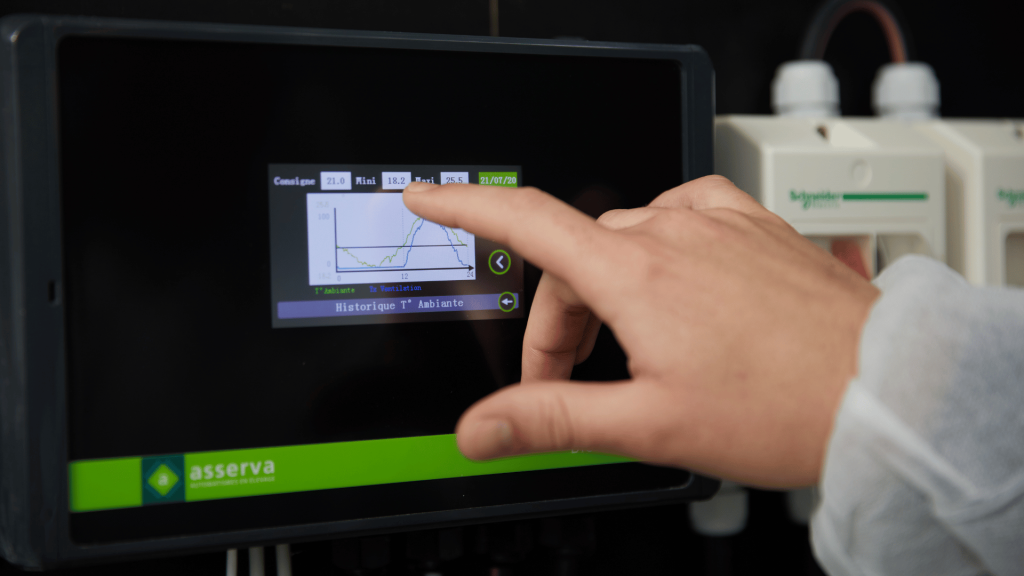
Asserva has rolled out Kolus as part of a three-pronged adoption strategy: integrating direct access to the customer service form Kolus into their website; modifying the phone system to direct customers to self-service; and placing QR codes on equipment installed at farmers’ facilities.
Three multilingual support workflows (French, Spanish, English) have been created. The customer scans the QR code in their livestock facility, describes the issue with photos, and creates a structured support ticket without having to pick up the phone.
On the customer service side, tickets are categorized by product and automatically routed to the appropriate technician. Every morning at 7 a.m., the Customer Service Manager reviews any unanswered tickets and follows up with each customer. This systematic follow-up did not exist before.
The Practice That Changes Everything: Farmers’ Adoption of Self-Service
Of 9,600 tickets over 12 months, nearly 3,000 were created directly by customers through the self-service channels. One-third of the after-sales service volume was generated independently by pig and cattle farmers. This proves that the tool’s user-friendliness and the deployment strategy (QR codes, standard redirection, multilingual pathways) can help any customer base adopt digital solutions.
Results
; ~1,000 customer service requests per month
d one-third of the total volume
—freeing up the receptionist
“We sell state-of-the-art products, yet we were still asking our customers to pick up the phone to get technical support. Today, the farmer scans the QR code on his equipment, describes the problem with photos, and the right technician takes the ticket. My service technicians couldn’t imagine working without it anymore.”
Thierry Debons
Customer Service Manager